
Faculty of Law and Political Science

Mr. Abdul Basir Nabizada
Educational Background:
- M.A. in Criminal Law and Criminology, Al-Mustafa Institute of Humanities, 2010–2012;
- B.A. in Law, Al-Mustafa Institute of Humanities, 2005–2009.
Academic Achievements and Honors:
- Scientific Achievements
- Recognized as a Research and Teaching Scholar, 2008;
- Selected participant, International Conference on Youth Rights in Islamic Societies, University of Tehran, 2011;
- Completed Islamic Law and Human Rights Research Course (64 hours);
- Completed Modern Teaching Skills and Techniques Course (80 hours);
- Member of the permanent faculty of Khatam al-Nabieen University, 2012–present.
- Academic Activities
- Conducted training courses on criminalization, decriminalization, and cybercrime for staff and experts at the Legislative Directorate and Ministry of Justice;
- Taught legal courses at universities and private higher education institutes at undergraduate and graduate levels;
- Developed a five-year strategic plan (2016–2021) for the faculty;
- Contributed to university-wide and master’s program planning at Khatam al-Nabieen University;
- Prepared operational and annual plans for faculty and departments;
- Developed oversight plans and recommendations for addressing deficiencies on a six-month and annual basis;
- Supervised the implementation of departmental operational plans;
- Reported progress and compliance of operational plans to the vice chancellor for academic affairs;
- Supervised and evaluated over 85 undergraduate monographs;
- Guided more than 35 Master’s theses
- Provided consultation on 30 additional Master’s dissertations;
- Participated in and delivered presentations at academic conferences in private universities.
Work Experience:
- Member, National Research Center of Afghanistan, 2009–2013;
- Editorial Board Member, Rahbord-e No Monthly, 2003–2009;
- Editor-in-Chief, Pazhuheshnama-ye Huquq Quarterly, 2010–2013;
- Faculty Member, Khatam al-Nabieen University, 2012–present;
- Vice Dean, Faculty of Law and Islamic Jurisprudence, 2012–2014;
- Director of Research, Khatam al-Nabieen University, 2015–2017;
- Judicial and Legal Expert, Legal Advisory Office of the Presidency, 2014–2016;
- Contributor to drafting government legal advisory regulations;
- Field visits to Bamyan and Maidan Wardak provinces to evaluate judicial and legal institutions;
- Field visits to Parwan and Panjshir provinces to assess prosecutor offices, courts, and detention centers;
- Participation in committees for legal review and evaluation of laws and regulations, including Higher Education Private Institutions Regulation, Land Law, and National Standards;
- Provincial Commissioner, Independent Election Complaints Commission, Parwan Province, 21 July 2019 – 19 March 2020;
- Dean, Faculty of Law and Islamic Jurisprudence, Khatam al-Nabieen University, 2017–2020;
- Director, Quality Enhancement, Planning, and Policy, 21 December 2022 – 23 April 2024;
- Dean, Faculty of Law and Political Science, 21 July 2024–present.
Courses Taught:
| 1 | Comparative Administrative Law | 10 | Special Criminal Law |
| 2 | Administrative Law (General & Afghanistan) | 11 | Environmental Law |
| 3 | Comparative Law | 12 | Individual Property Law |
| 4 | Constitutional Law (General & Afghanistan) | 13 | Economic Criminal Law |
| 5 | General Criminal Law | 14 | Juvenile Delinquency Law |
| 6 | Private International Law | 15 | Criminology |
| 7 | Public International Law | 16 | Penology |
| 8 | Financial Law I & II | 17 | Media and Cybercrime Law |
| 9 | Consumer Law |
Scientific Works:
- Books in Progress
- Juvenile Delinquency Law;
- Intellectual Property Law;
- Environmental Law (under development);
- Theses
- Epistemological Foundations of Liberalism, B.A. in Islamic Jurisprudence and Islamic Studies, defended Summer 2004;
- Crimes and Administrative Offenses in Afghanistan: Causes and Solutions, B.A. in Public Law, defended Spring 2009;
- Afghanistan’s Criminal Policy on White-Collar Crimes, M.A. in Criminal Law and Criminology, defended in Winter 2012.
- Published Articles
I have authored more than twenty scholarly articles on jurisprudential, legal, and political issues. Some of these works have been published in reputable international academic journals, while others have appeared in national scholarly and specialized publications. Selected examples include:
- Revisiting Political Parties in the Constitution of Afghanistan and International Instruments, Payam-e Mohajer, No. 1, Autumn 2007;
- Freedom of Expression: Limitations and Functions, Hadi Monthly, No. 3, 2005;
- Foundations of Youth Rights in Islamic and Western Thought, in Youth Rights in Islamic Societies, December 2011;
- An Examination of the Legal Dimensions of Hardship and Distress (ʿUsr wa Ḥaraj),” Hadi Monthly, No. 5, February–March 2007;
- Cyber Crimes and Legal Challenges, Payam-e Mohajer, No. 2, Winter 2007;
- Strain Theory and White-Collar Crime, Law Research Journal, No. 3, October 2010;
- Factors and Solutions for Administrative Violations in Afghanistan, Law Research Journal, No. 4, Winter 2010;
- Legal and Political Challenges of the Karzai Administration, Rahbord-e Naw Monthly, No. 4, July 2005;
- Karzai and Local Governments (Commanders), Rahbord-e Naw Monthly, No. 12, Winter 2007;
- A Study of White-Collar Crime, Khatam Al-Nabieen University Scientific Research Quarterly, Vol. 3, No. 6, Spring 2018.
Responsibilities of the Dean of the Faculty
- To effectively represent the faculty at the higher levels of the university and before external institutions and stakeholders;
- To formulate appropriate proposals and strategic plans for improving the academic and administrative performance of the faculty;
- To provide constructive recommendations to the Academic Vice Chancellor for the enhancement of academic, administrative, and executive affairs;
- To supervise the implementation of laws, regulations, bylaws, and resolutions of the Faculty Academic Council and university councils;
- To convene and chair Faculty Council meetings and forward approved resolutions to the relevant authorities for implementation and legal processing;
- To oversee the academic and educational activities of the departments;
- To supervise undergraduate final research projects and Master’s theses;
- To oversee the review and revision of the academic curriculum and submit recommendations to the university’s central committee;
- To establish academic, research, and capacity-building collaborations with reputable external academic institutions;
- To strive for the continuous improvement of teaching quality and the adoption of the latest academic developments in education;
- To foster a cooperative and collegial environment among faculty members and ensure student satisfaction as the university’s primary stakeholders;
- To supervise all programs and activities of the faculty’s subcommittees;
- To collect, consolidate, and review reports submitted by faculty committees;
- To evaluate the reports and activities of committees and departments and provide appropriate solutions where necessary;
- To formulate and implement the faculty’s five-year strategic plan;
- To receive monthly reports from the relevant departments regarding the academic and teaching activities of faculty members;
- To design, manage, and organize academic seminars approved by the relevant Academic Council;
- To direct and administer the faculty’s research affairs;
- To communicate and implement decisions and directives issued by higher authorities to the departments;
- To participate in official meetings and external sessions when required and upon the instruction of the Academic Vice Chancellor;
- To provide feedback to the respective department heads;
- To supervise the updating of curricula in accordance with societal needs and recommend revisions when necessary;
- To submit comprehensive semester-based and annual reports on all faculty activities to the academic vice chancellor;
- To implement the faculty’s annual monitoring program and ensure its timely submission to the academic vice chancellor;
- To perform other lawful duties assigned by the higher authorities.
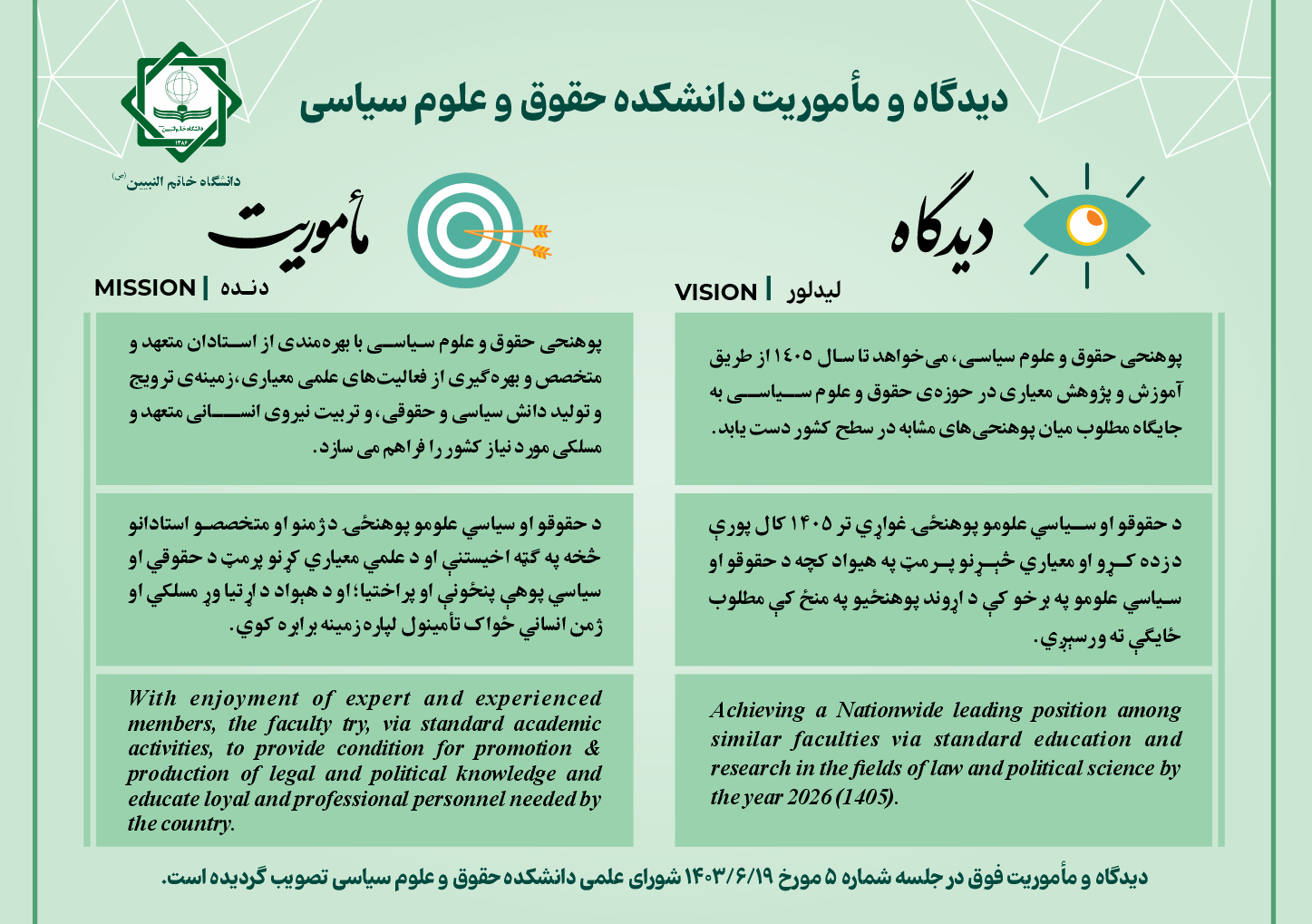
The Faculty of Law and Political Science at Khatam al-Nabieen University is one of the university’s earliest and most established academic-administrative units. Authorized by the Ministry of Higher Education, the faculty was founded to educate and train committed and skilled professionals at the undergraduate and graduate levels, guided by the principles of “commitment” (moral integrity) and “expertise” (applied knowledge).Historically, the Faculty of Islamic Law and Law was the first and oldest faculty established at Khatam al-Nabieen University in 2007 (1386 AH), followed by the Faculty of Political Science in 2009 (1388 AH), making it the second longest-standing academic institution within the university.
Over the years, the faculty has achieved a natural and synergistic integration of disciplines, combining quality advancement with academic excellence. After decades of dedicated and specialized work in the distinct domains of law and political science, these faculties were merged in 2024 (1403 AH) under the title Faculty of Law and Political Science, following the recommendations of the Ministry of Higher Education. This merger created a unified faculty composed of two departments—Law and Political Science—allowing for continued growth, collaboration, and academic development. The faculty currently comprises seventeen permanent faculty members, most holding doctoral degrees with academic ranks of Pohandow and Pohand. It has successfully organized graduation ceremonies for multiple cohorts: fourteen undergraduate law classes (2011–2023), ten master’s programs in international law and criminal law & criminology (2014–2023), thirteen undergraduate political science classes, and ten master’s classes in international relations. These activities reflect a robust and constructive organizational life within the faculty.
Academic Programs
The faculty’s ability to offer advanced academic programs is a hallmark of its distinction and excellence. A faculty can only admit and cultivate students at higher education levels if it possesses not only adequate financial, physical, informational, and human resources but also a proven record of successfully educating students at intermediate levels.
The Faculty of Law and Political Science proudly offers the following:
· Undergraduate Programs: Law and Political Science;
· Graduate Programs (Master’s): Criminal Law and Criminology, International Law, and International Relations.
The faculty is responsible for the planning, organization, guidance, supervision, and evaluation of these programs and has successfully educated numerous students across its undergraduate and graduate disciplines.
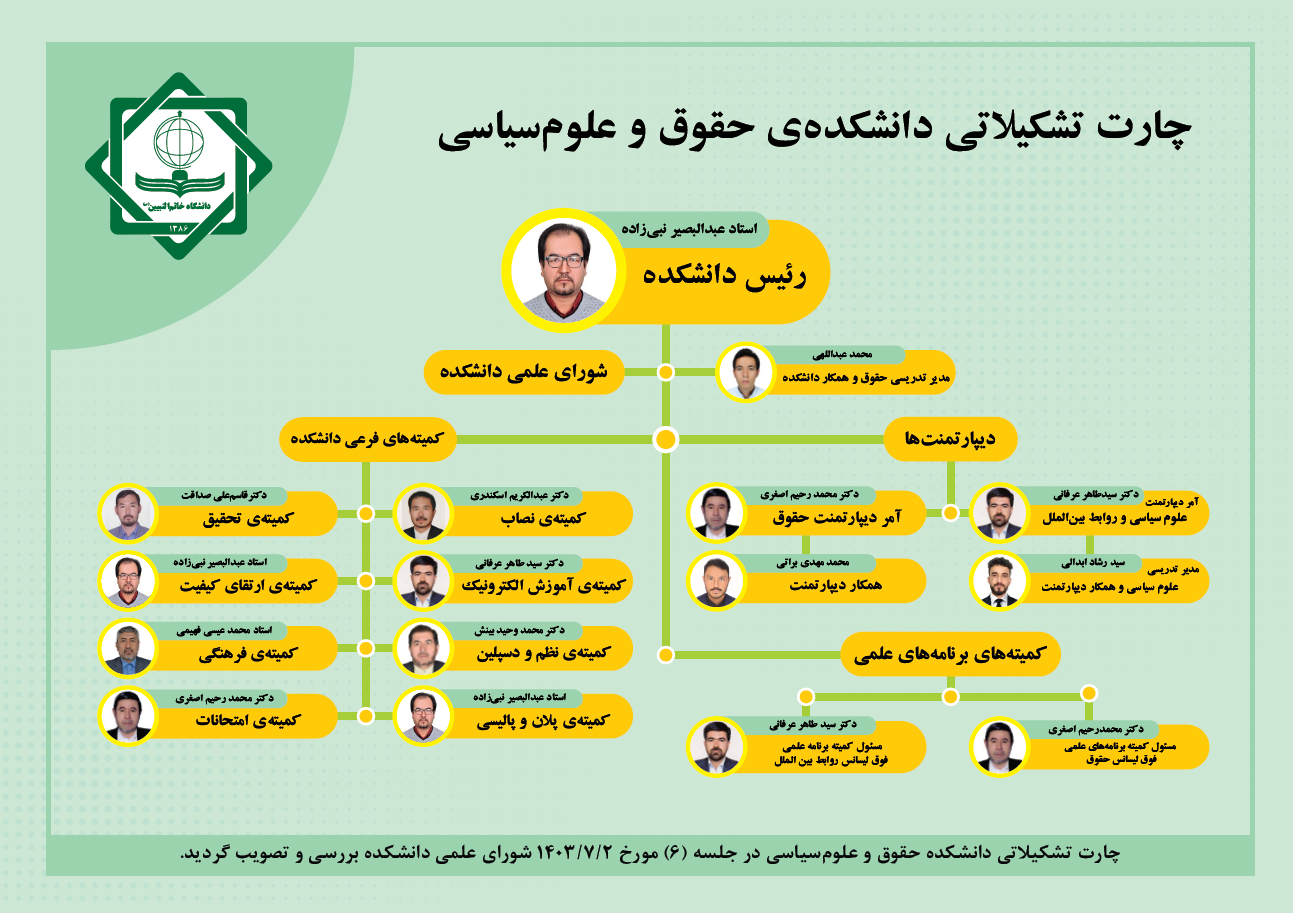
Department of Law Administration
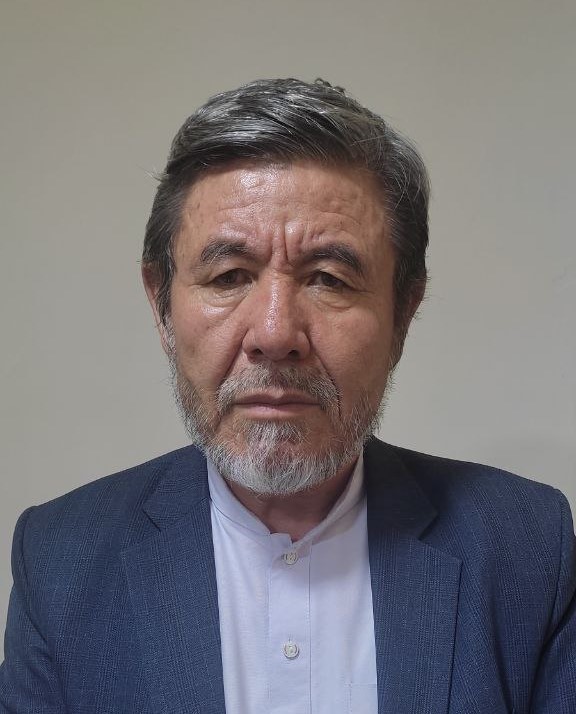
Dr. Mohammad Rahim Asghari
Educational Background:
- Ph.D. in Criminal Law and Criminology, Faculty of Law, Al-Mustafa International University, 2021/2022.
Academic and Executive Activities:
- Dean, Faculty of Law and Political Science, Ghazni Campus (2022–2023);
- Director, Khatam al-Nabieen (PBUH) Higher Education Institute, Jaghori (2014–2019).
About the Department of Law
About the Department of Law
The Department of Law offers a Bachelor of Law program, as well as master’s programs in criminal law and criminology and international law.
Bachelor’s Program
The Bachelor of Law program in Afghanistan’s higher education system typically spans four academic years, though high-performing students may graduate after seven semesters. This program is designed for students who have completed the 12-year general education curriculum and seek professional training in areas such as judiciary and prosecution, judicial jurisprudence, commercial law, family law, public and private law, or advanced legal education.
Educational Objectives of the Law Program: The program aims to equip students with the knowledge, understanding, and competencies to:
- Knowledge and understanding of the nature, foundations, purposes, sources, and logic of Afghanistan’s legal system, international documents, and the role of Islamic jurisprudence at this level;
- Analyze and apply national and international legal requirements in private, public, domestic, and international contexts;
- Evaluation and application of mandatory and supplementary rules governing fair political participation, good governance, and national and international transactions and interactions;
- A value-oriented perspective and ability to use civil, criminal, and judicial rules and principles in the process of filing, adjudicating, and defending cases, providing consultations, judging, and resolving international legal and criminal disputes;
- Skill and creativity in interpreting legal sources and the ability to train human resources based on national and international legal systems;
- Readiness and proficiency in conducting specialized scientific research, writing legal texts, explaining the Islamic legal system and international law, and comparing legal systems using rational arguments.
Master’s Programs Committee
The Master’s Programs Committee is responsible for the organization, oversight, and advancement of the Faculty’s postgraduate programs under the approval and supervision of the Board. Established in 2019 in accordance with Article 13 of the postgraduate regulations, it oversees programs previously conducted under the Departments of Public and International Law, Criminal Law and Criminology, and International Relations.
Criminal Law and Criminology Program
The Master’s program typically spans two to three years, structured across four semesters to allow students sufficient time for thesis completion. Students who defer or fail to achieve required grades in certain courses may complete coursework within three years, provided their semester averages meet the minimum legal requirement.
International Law Program
International law is a branch of law that regulates the relations between subjects and members of the international community, generally encompassing relations with at least one foreign element. This program focuses on the regulation of relations among members of the international community, as well as interactions with at least one foreign element. It addresses the nature, foundations, objectives, sources, and logic of international law, the role of international instruments in global order, and the application of legal rules in public, private, national, and international contexts. Students also study mandatory and supplementary rules governing political participation, governance, and international transactions.
Career Prospects for Law Graduates
- Teaching: Qualified to teach at the undergraduate level in alignment with their master’s specialization;
- Research: Conduct specialized legal research and produce academic legal writings;
- Legal Practice: Practice as licensed attorneys or legal defenders in companies, institutions, or the wider community;
- Judiciary and Arbitration: Enter the judiciary through the Supreme Court internship exam or serve as legal arbitrators;
- Legal Consultation: Provide expert legal advice to individuals and public or private entities;
- Legal Analysis and Drafting Proposed Laws: Graduates can analyze legal texts and draft laws and regulations, serving as drafters or contributors in the National Assembly and governmental organizations;
- Public and Private Sector Employment: Serve as executives, administrators, or staff in government or non-governmental organizations;
- Social Institution Activities: Graduates can establish political or civil organizations and serve as expert members in these institutions;
Responsibilities and Competencies of the Department Administration
Responsibilities and Competencies of the Department Administration
- Plan, organize, and chair departmental meetings;
- Monitor the implementation of theoretical and practical course curricula and submit semester reports to the faculty;
- Manage all educational, administrative, and operational processes of the department;
- Prepare semester and annual academic plans;
- Propose measures for improving departmental academic and administrative operations;
- Address departmental;
- advise the Dean on educational and administrative improvements;
- Monitor students’ academic performance, compliance with regulations, course registration, attendance, examinations, monographs, and graduation procedures;
- Recommend recognition and awards for faculty demonstrating excellence in teaching and research;
- Maintain faculty academic files and record teaching and research activities semester-wise;
- Organize student enrichment activities (e.g., reading competitions, academic trips, and essay contests) and maintain documentation;
- Identify and follow up on educational and administrative departmental needs;
- Conduct teaching quality evaluations and prepare corresponding reports;
- Manage Bachelor’s theses and Master’s dissertations (topic selection, distribution, supervision, and review);
- Participate in faculty teaching assessments and report to the Faculty Council;
- Conduct departmental quality enhancement meetings and document resolutions;
- Preparing and submitting semester-based and annual reports on all departmental activities to the Dean’s Office of the Faculty;
- Preparing annual monitoring reports and periodic reviews of the relevant academic program in collaboration with the panel committee;
- Participate in official meetings, including external events, as directed by the Dean;
- Oversee contractual faculty activities;
- Recommend faculty recruitment and follow the legal procedures;
- Perform other lawful duties as assigned.
Department of Political Science and International Relations Administration
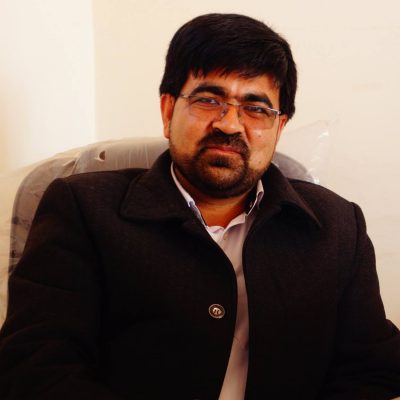
Dr. Seyed Taher Erfani
Educational Background:
- Ph.D. Candidate in International Relations, University of Tehran;
- M.A. in International Relations, Allameh Tabataba’i University, Tehran;
- B.A. in Political Science, Imam Khomeini Educational and Research Institute.
About the Department of Political Science and International Relations
About the Department of Political Science and International Relations
The Department of Political Science and International Relations aims to provide specialized education in political science at the undergraduate level and international relations at the postgraduate level, preparing students to become capable professionals serving the nation and its political institutions.
Established in 2009 as the second department of Khatam al-Nabieen (PBUH) University under the Faculty of Law and Political Science, the department has celebrated the graduation of ten undergraduate cohorts and nine Master’s cohorts in International Relations. In addition to the contributions of numerous contractual faculty members each semester, the department benefits from a qualified, permanent faculty with extensive teaching and research experience and high academic rank.
Bachelor’s Program in Political Science
The undergraduate program in political science typically spans four academic years, though high-achieving students may graduate after seven semesters. The curriculum is structured according to the cluster system developed and distributed by the Ministry of Higher Education of the Islamic Emirate of Afghanistan, which defines all courses within the program.
Courses are categorized into
The curriculum is structured according to the cluster system developed and distributed by the Ministry of Higher Education of the Islamic Emirate of Afghanistan, which defines all courses within the program.
- Core courses (44 credits, 28% of total credits);
- Specialized courses (83 credits, 52% of total credits);
- Elective and university-wide courses (20 credits, 13% of total credits);
- Practical work and monographs (11 credits, 7% of total credits);
- An additional 7% of total credits is allocated for practical activities, including internships, fieldwork, and study tours.
Master’s Program in International Relations
International relations, as a branch of social sciences, examines the relationships between states and the international community, analyzing how values such as security, freedom, order, justice, and welfare influence state behavior.
Educational Objectives of the International Relations Program
- Familiarity with classical, modern, and postmodern theories in international relations;
- Analysis and application of international relations theories in addressing international issues;
- Utilizing and evaluating scientific criteria in critiquing and reviewing international relations;
- Ability to apply the latest international relations theories to national questions;
- Skill and creativity in using theoretical concepts and scientific propositions in international relations to guide policy-making and regulate Afghanistan’s international relations;
- Readiness to write about rules and issues related to international relations.
- Career Opportunities in Political Science and International Relations
- Ability to analyze national and international political issues;
- Teaching in political science disciplines;
- Conducting scientific research in various branches of political science;
- Guiding political and social movements toward national solidarity and interests;
- Administrative roles in various government sectors;
- Managing and participating in political and civil parties;
- Representing the government at national and international levels;
- Influencing policy-making and macro-level societal management;
- Providing consultation in political planning and direction.
Responsibilities and Competencies of the Department Administration
Responsibilities and Competencies of the Department Administration
- Plan, organize, and chair departmental meetings;
- Monitor the implementation of theoretical and practical course curricula and submit semester reports to the faculty;
- Manage all educational, administrative, and operational processes of the department;
- Prepare semester and annual academic plans;
- Propose measures for improving departmental academic and administrative operations;
- Address departmental;
- advise the Dean on educational and administrative improvements;
- Monitor students’ academic performance, compliance with regulations, course registration, attendance, examinations, monographs, and graduation procedures;
- Recommend recognition and awards for faculty demonstrating excellence in teaching and research;
- Maintain faculty academic files and record teaching and research activities semester-wise;
- Organize student enrichment activities (e.g., reading competitions, academic trips, and essay contests) and maintain documentation;
- Identify and follow up on educational and administrative departmental needs;
- Conduct teaching quality evaluations and prepare corresponding reports;
- Manage Bachelor’s theses and Master’s dissertations (topic selection, distribution, supervision, and review);
- Participate in faculty teaching assessments and report to the Faculty Council;
- Conduct departmental quality enhancement meetings and document resolutions;
- Preparing and submitting semester-based and annual reports on all departmental activities to the Dean’s Office of the Faculty;
- Preparing annual monitoring reports and periodic reviews of the relevant academic program in collaboration with the panel committee;
- Participate in official meetings, including external events, as directed by the Dean;
- Oversee contractual faculty activities;
- Recommend faculty recruitment and follow the legal procedures;
- Perform other lawful duties as assigned.
Subcommittee for Curriculum
Charter of the Subcommittee for Curriculum
Introduction
The curriculum serves as a comprehensive reflection of the educational system, encompassing the foundational and most prominent documents and experiences of academic programs. It not only presents the content and subjects of instruction but also clarifies the structure, duration, and credit allocation of courses. Moreover, it captures the educational experiences and learning outcomes and serves as a standard for assessment, evaluation, and accreditation. To achieve these objectives, the Subcommittee for Curriculum has been established within the faculty.
Basis
This charter is formulated based on Article 14 of the Civil Higher Education Law and Article 33 of the University Statute.
Objectives
- Enhance the content and structure of courses;
- Align the curriculum with the academic, practical, and societal needs of the country;
- Ensure the curriculum reflects advancements in knowledge and applicable skills;
- Facilitate more effective and objective evaluation of educational content and learning outcomes.
Structure and Membership
- The Subcommittee for Curriculum operates within the faculty structure;
- Membership comprises at least three faculty members (with additional members from the faculty as needed);
- The term of membership is one year, with eligibility for renewal;
- Members elect one experienced faculty member as Chair through a confidential direct vote.
Quorum
Committee meetings are considered official with a majority of members present;
Decisions and approvals are valid with an absolute majority of members in attendance.
Duties and Responsibilities
In accordance with Article 14 of the Civil Higher Education Law and relevant higher-level regulations, the Subcommittee for Curriculum is tasked with the following:
- Conduct semester-wise reviews of existing courses and propose revisions to the faculty to ensure alignment with legal provisions, academic and social needs, and labor market requirements;
- Review and propose amendments to educational needs assessment questionnaires prepared by the departments;
- Continuously monitor the implementation of approved course syllabi, materials, and resources within departments and the faculty;
- Oversee the development, distribution, and implementation of policy courses and recommend improvements to the relevant department;
- Develop operational plans, measures, and other necessary programs for the committee;
- Organize meetings according to the pre-established calendar (at least once per month) and maintain standardized records of all decisions and recommendations;
- Propose additions, deletions, substitutions, or rearrangements of courses to the faculty;
- Review and provide feedback on newly proposed curricula submitted by departments;
- Collaborate with the curriculum evaluation team for periodic curriculum review;
- Collect and maintain standardized records and documentation related to the curriculum;
- Prepare and submit semester and annual reports to the faculty in a timely manner.
Subcommittee for Research
Charter of the Subcommittee for Research
Basis
The Faculty Research Subcommittee is established in accordance with Chapter Two, Article 33, Note 1 of the University Statute.
Objectives
- Enhance research activities within the faculty;
- Provide research opportunities for faculty members and students;
- Organize research projects to achieve meaningful and high-quality outcomes;
- Facilitate the development of research capacities for both faculty and students.
Article 1: Membership
- The Faculty Dean, together with a faculty member selected by the Faculty Academic Council;
- At least two faculty members, appointed by the Faculty Academic Council;
- One student, appointed by the Faculty Academic Council.
Clause 1: Students eligible for membership must
- Have the highest academic standing in their cohort;
- Be ethically and morally approved;
- Have completed at least half of their academic program;
- Possess certain research skills.
Clause 2: Faculties offering Master’s programs may include one student from the Master’s level as a committee member, in addition to the undergraduate student, selected by the Faculty Academic Council.
Article 2:
The term of office for committee members is one year.
Article 3:
The Research Subcommittee meets regularly at least once per month.
Article 4: Responsibilities
- Develop and implement the faculty’s annual research program;
- Facilitate research opportunities for faculty members and students;
- Propose new and significant research topics for students each semester;
- Organize research capacity-building courses at the faculty level;
- Conduct student research competitions on specialized topics;
- Recommend selected student theses for publication as books through the University Research Council;
- Establish research collaborations with national and international institutions related to the faculty;
- Organize academic seminars at both faculty and university levels.
Subcommittee for E-Learning
Charter of the Subcommittee for E-Learning
Article 1: Basis
The Subcommittee for E-Learning is established in accordance with Article 33, Clause (c) of the University Statute.
Article 2: Objectives
- Enhance the effectiveness of the university’s e-learning programs;
- Strengthen and develop scientific and technological capacities in e-learning;
- Promote and improve the infrastructure for e-learning;
- Clarify the roles and responsibilities of the main committee and the subcommittees for e-learning.
Article 3: Membership
- Members of the Subcommittee for E-Learning are selected by the Faculty Academic Council for a one-year term and submitted through the relevant office to the Academic Vice Chancellor for approval;
- Membership may be renewed with the approval of the respective faculty;
- Meetings are held monthly according to a pre-determined calendar.
Article 4: Responsibilities of the Subcommittee
- Prepare operational plans, initiatives, and other necessary programs of the subcommittee, considering relevant indicators;
- Develop and approve the subcommittee’s meeting calendar and conduct meetings accordingly;
- Implement and follow up on resolutions of both the subcommittee and the main e-learning committee in a timely manner;
- Propose guidelines and plans for e-learning to advance related activities and present them to the faculty;
- Ensure that the Subcommittee Chair is a member of the Main E-Learning Committee;
- Promote and manage e-learning activities within the faculty;
- Evaluate the e-learning content of faculty members in accordance with established standards;
- Collect, maintain, and archive all documents and evidence relevant to the subcommittee;
- Prepare semester and annual performance reports of the subcommittee and submit them to the faculty.
Subcommittee for Quality Enhancement
Charter of the Subcommittee for Quality Enhancement
Article 1: Basis
The Charter of the Subcommittee for Quality Enhancement is formulated in accordance with Article 18 of the Quality Assurance and Accreditation Regulations of the Ministry of Higher Education, the charter of the Main Committee, and the University Statute.
Article 2: Objectives
- Institutionalize the quality enhancement process within the relevant domain and uphold the university’s academic credibility in this area;
- Ensure compliance with university regulations, bylaws, and policies.
Article 3: Structure and Membership
The Subcommittee for Quality Enhancement operates under the Dean of the Faculty and comprises the following members:
- The Dean of the Faculty, serving as the subcommittee chair;
- Heads of the relevant departments, serving as members;
- Membership in the subcommittee is for a one-year term, renewable without restriction;
- A minimum of three full-time faculty members must be part of the subcommittee.
Article 4: Quorum
- A meeting of the subcommittee is considered valid with the presence of the majority of members;
- Decisions are adopted by an absolute majority of the members present;
- Meetings are held at least once a month according to a pre-determined calendar. Extraordinary meetings may be called as necessary, with a formal agenda.
Article 5: Responsibilities of the Subcommittee
- Approve the subcommittee’s meeting calendar;
- Review and approve the subcommittee’s operational plans;
- Examine and approve quarterly and annual reports of the subcommittee;
- Provide guidance on the formulation of quality enhancement programs;
- Oversee all academic, administrative, teaching, and research activities of the faculty and affiliated units;
- Conduct inspections of activities through a designated panel and submit reports to the Faculty Academic Council;
- Approve the inspection reports on quality enhancement activities submitted by the panel;
- Encourage, facilitate, and provide advisory support for improving quality at the faculty level;
- Conduct a Self-Assessment (SA) of relevant academic programs and formally submit the results to the Main Committee after approval by the Faculty Academic Council.
Subcommittee on Order and Discipline
Charter of the Subcommittee on Order and Discipline
Article 1: Basis
This charter is established pursuant to Clause 3, Item 2 of Article 60 of the Civil Higher Education Law, enacted in Qaws 1396 (2017/2018), and in accordance with Article 33, Part 1 of the Statute of Khatam al-Nabieen(PBUH) University. The subcommittee is created to ensure the regular and orderly continuation of academic and administrative activities and to prevent potential misconduct or deviations within the university.
Article 2: Objectives
- Ensure order and discipline within the faculty;
- Monitor adherence to rules and discipline across the faculty;
- Establish and maintain a safe and calm environment;
- Promote mutual respect among students, faculty, and staff;
- Foster Islamic ethics and adherence to core Islamic principles among students;
- Cultivate a sense of personal responsibility among students;
- Address complaints and suggestions within the faculty;
- Submit reports on all activities conducted at the faculty level.
Article 3: Structure and Composition
The Subcommittee on Order and Discipline consists of:
Chair: Dean of the faculty;
Members: Two faculty members appointed by the Faculty Council;
Secretary: Administrative or teaching officer of the faculty.
Note: The term of service for the committee is one year.
Article 4: Quorum and Decision-Making
- Meetings are considered official with a majority of members present;
- Committee members may be replaced after one year;
- Meetings are held once per month;
- Decisions require an absolute majority of members present.
Clause: In urgent situations requiring immediate attention, extraordinary meetings may be called at the discretion of the chair.
Article 5: Duties and Responsibilities
- Develop the faculty-level operational plan aligned with the university’s main committee plan;
- Establish a regular monthly meeting calendar;
- Address complaints from students, faculty, and staff;
- Engage all relevant parties in resolving identified issues;
- Monitor the implementation of disciplinary regulations as outlined in the university’s disciplinary committee charter;
- Review exam-related violations referred by the Examination Committee;
- Refer cross-faculty cases to the university’s main Subcommittee on Order and Discipline.
- Handle security-related violations within the faculty;
- Address misuse of academic work and intellectual property;
- Investigate violations such as document forgery or academic cheating;
- Maintain a disciplinary record book at the faculty level;
- Establish a complaints and suggestions box;
- Conduct orientation sessions for new students on the faculty’s code of ethics;
- Submit monthly and semester reports on committee activities to the university’s main committee on order and discipline.
Article 6: Disciplinary Measures
- The faculty implements disciplinary measures for students through the Subcommittee on Order and Discipline.
- Potential sanctions include the following:
- Verbal warning;
- Written warning;
- Suspension from attending a single lecture;
- Suspension from a course for three weeks;
- Temporary expulsion;
- Permanent expulsion;
- Compensation for damages.
Clause: Measures 1–4 are implemented based on the committee’s decisions, while measures 5–7 require recommendation by the subcommittee and approval by the University Supreme Council.
Subcommittee for Cultural Affairs
Charter of the Subcommittee for Cultural Affairs
Article 1: Basis
This charter is established pursuant to Articles 41–44 of the University Statute, the Main Cultural Committee’s Duties Charter, and the new framework provided by the Ministry of Higher Education.
Article 2: Objectives
- Enhance the religious and national commitment within the university community;
- Promote an environment of vitality, optimism, and hope on campus;
- Institutionalize awareness among university members of religious role models, Islamic ethics, and nationally valued customs.
Article 3: Structure and Membership
- The Subcommittee for Cultural Affairs is integrated within the faculty structure;
- The chair and members are appointed by the Faculty Academic Council for a one-year term and are submitted to the University Administration for approval;
- Committee membership may be renewed with the consent of the respective faculty;
- Committee meetings are held once a month, according to a pre-established calendar.
Article 4: Duties and Responsibilities
The Subcommittee for Cultural Affairs is tasked with the following responsibilities to achieve the faculty’s objectives:
- Develop and implement the operational plan, measures, and other programs required by the committee;
- Prepare and approve the committee’s meeting calendar and conduct meetings accordingly;
- Ensure the timely execution and follow-up of decisions made by both the Subcommittee and the Main Cultural Committee;
- The Subcommittee Chair serves as a member of the Main Cultural Committee;
- Propose and approve the programs and initiatives of the subcommittee;
- Advanced cultural activities at the faculty level;
- Collect and maintain standardized records and evidence related to the committee’s activities;
- Prepare semester and annual performance reports and submit them to the relevant administrative office.
Subcommittee for Planning and Policy
Charter of the Subcommittee for Planning and Policy
Article 1: Basis
This charter is drafted in accordance with Article 18 of the Quality Assurance and Accreditation Regulations of the Ministry of Higher Education, the Main Committee Charter, and the University Statute.
Article 2: Objectives
- Institutionalize systematic planning and program implementation;
- Ensure compliance with university regulations and timely execution of tasks;
- Maintain and enhance the academic credibility of the faculty.
Article 3: Structure and Membership
The Subcommittee for Planning and Policy operates under the authority of the faculty dean and is composed as follows:
- One faculty member appointed as the subcommittee head;
- Heads of the relevant departments, serving as members;
Clause 1: The committee must have at least three members. Membership is for one year, with renewal permitted.
Article 4: Quorum
- A meeting of the subcommittee is considered valid with the presence of the majority of members;
- Decisions are adopted by an absolute majority of the members present;
- Meetings are held at least once per month, according to a pre-determined calendar;
- Extraordinary meetings may be called as necessary, with a formal agenda.
Article 5: Responsibilities of the Subcommittee
- Approve the subcommittee’s meeting calendar;
- Review and approve the subcommittee’s operational plans;
- Examine and approve quarterly and annual reports of the subcommittee;
- Provide guidance on program development and planning processes;
- Monitor the preparation and implementation of operational plans and reports of the faculty and its affiliated units;
- Approve consolidated monitoring reports on the execution of operational plans across the faculty and affiliated units;
- Oversee the monitoring of all faculty activities through a designated board and submit reports to the Faculty Academic Council for approval;
- Encourage, facilitate, and provide advisory support for improving quality at the faculty level;
The university’s strength lies in its faculty, who embody both commitment and expertise—qualities of exceptional significance. A faculty with Islamic ethics and specialized knowledge exerts a constructive influence on students’ perspectives, attitudes, and inclinations, shaping their thinking, culture, and future, while enhancing the quality and excellence of the university. The Faculty of Law and Political Science at Khatam al-Nabieen (PBUH) University hosts a large, permanent faculty with extensive teaching and research experience, offering both academic and ethical guidance. These faculty members hold high academic ranks and degrees and are distinguished by their dedication and professional competence.
No. | Full Name | Academic Degree | Academic Rank | Current Position |
1 | Sayed Abdul Qayum Sajjadi | PhD in International Relations | Professor | Permanent Academic Staff Member and Chancellor of the University |
2 | Abdul Ali Mohammadi | PhD in Public Law | Associate Professor | Permanent Academic Staff Member |
3 | Sayed Abdul Latif Sajjadi | PhD in Judicial Law | Associate Professor | Permanent Academic Staff Member |
5 | Mohammad Wahid Binish | PhD in Political Thought | Professor | Permanent Academic Staff Member and Director of the Master’s Board |
5 | Abdul Karim Eskandari | PhD in Criminal Law and Criminology | Professor | Permanent Academic Staff Member and Vice Chancellor for Academic Affairs |
6 | Qasim Ali Sadaqat | PhD in Public Law | Professor | Permanent Academic Staff Member and Vice Chancellor for Research |
7 | Hussain Habibi | PhD in Criminal Law and Criminology | Associate Professor | Permanent Academic Staff Member and Head of Ghazni Branch |
8 | Mohammad Zaki Karimi | PhD in Public Policy | Assistant Professor | Permanent Academic Staff Member |
9 | Sayed Yaqoub Arefi | PhD Candidate in Private Law | Assistant Professor | Permanent Academic Staff Member and Director of the Human Sciences Research Center |
10 | Ali Ahmad Rezayee | PhD in Foundations of Islamic Law | Assistant Professor | Permanent Academic Staff Member |
11 | Azizullah Fasihi | PhD in Criminal Law and Criminology | Lecturer | Permanent Academic Staff Member |
12 | Abdul Basir Nabizada | Master’s Degree in Criminal Law and Criminology | Assistant Professor | Permanent Academic Staff Member and Dean of the Faculty |
13 | Mohammad Isa Fahimi | Master’s Degree in Islamic Jurisprudence and Islamic Studies | Assistant Professor | Permanent Academic Staff Member |
14 | Ramazan Ali Fasahat | Master’s Degree in Political Law | Lecturer | Permanent Academic Staff Member |
15 | Sayed Tahir Erfani | PhD in International Relations | Lecturer | Permanent Academic Staff Member and Head of the Department of Political Science |
16 | Mohammad Jawad Mohaddesi | Master’s Degree in International Relations | Assistant Professor | Permanent Academic Staff Member |
17 | Mohammad Rahim Asghari | PhD in Criminal Law and Criminology | Lecturer | Permanent Academic Staff Member and Head of the Department of Law |
Faculty Associate and Teaching Manager, Department of Law
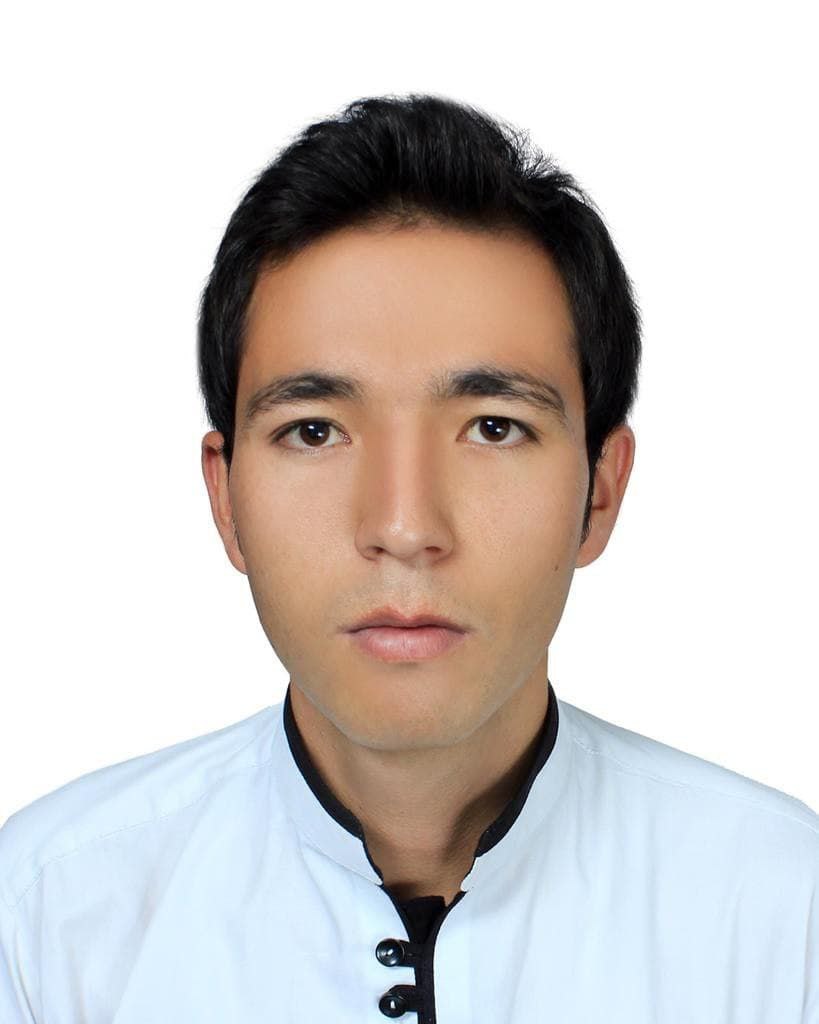
Mr. Mohammad Abdollahi, son of Abdollah, was born in 1370 (1991/1992) in the Borgagi area of Nahur District, Ghazni Province. He graduated from Seyed Jamaluddin High School in 1389 (2010/2011) and served as a teacher at Mianqal High School, Nahur District, Ghazni Province, in 1390 (2011/2012).
In 1395 (2016/2017), Mr. Abdollahi enrolled at Khatam al-Nabieen University (PBUH) to pursue higher education. He graduated in 1398 (2019/2020) with a bachelor’s degree in political science. In 1403 (2024/2025), he began his master’s studies in international relations at Khatam al-Nabieen University. Since 1400 (2021/2022), he has been actively engaged at Siraj University, Khatam al-Nabieen University—Ghazni Branch, and the Central Branch of Khatam al-Nabieen University.
Mr. Mohammad Abdollahi
Educational Background:
- Bachelor’s Degree in Political Science, Khatam al-Nabieen University (2016–2019);
- Master’s Student in International Relations, Khatam al-Nabieen University (2024–present).
Work Experience:
- Faculty Associate and Teaching Manager, Faculty of Law and Political Science, Khatam al-Nabieen University (2024–present);
- Administrative and Human Resources Officer, Khatam al-Nabieen University, Ghazni Branch (2023–2024);
- Examinations Manager, Khatam al-Nabieen University, Ghazni Branch (2022–2023);
- Administrative and Human Resources Manager, Siraj Higher Education Institute (2021–2022);
- Teacher, Mianqal High School, Nahur District, Ghazni Province (2011–2012)
Certificates and Awards:
- Certificate of Completion, 10-Month Language Program, Center for Languages and Applied Training, Khatam al-Nabieen University (2024);
- Certificate of Appreciation, Time Management Program, Khatam al-Nabieen University (2024);
- Certificate of Participation in a Scientific Seminar for University Faculty, Ghazni Universities, Ministry of Higher Education (2023);
- Work Certificate, Siraj Higher Education Institute (2022);
- Certificate of Appreciation, Parliamentary Elections Program, Joint Office of Jirghai Borgigai (Winter 2018);
- Computer Program Certificate, Keyhan Pouya English and Computer Center (2012);
- English Language Certificate, Keyhan Pouya English and Computer Center (2012).
Responsibilities as Faculty Associate, Faculty of Law and Political Science
- Collect and submit monthly faculty reports to the Office of Faculty Affairs;
- Prepare and circulate the Scientific Council meeting calendar
- Serve as a member and secretary of the Subcommittee on Order and Discipline;
- Communicate and follow up on decisions of the Scientific Council and subcommittees;
- Sort, distribute, and track correspondence, reports, and communications across faculty units;
- Maintain and archive documents, letters, and reports in designated locations;
- Schedule appointments with the Dean;
- Record and archive all incoming and outgoing correspondence;
- Monitor the faculty email account and report to the Dean;
- Provide assistance to visitors and faculty contact points;
- Actively participate in all quality assurance activities;
- Distribute official communications to higher-level offices and external stakeholders;
- Collect and review faculty dossiers and submit to the Office of Faculty Affairs;
- Develop and maintain a faculty database
- Perform other tasks assigned by the Dean.
Responsibilities as Teaching Manager, Department of Law
- Oversee student academic affairs, including semester registration, file creation, course selection, course add/drop, instructor assignment, deferment, course transfer, probation, graduation reporting, and academic performance monitoring;
- Schedule semester timelines, final exams, and exam cards;
- Track and report on student suspensions and probation per Article 34 of the Academic Regulations;
- Manage all matters related to Master’s theses and undergraduate final research projects;
- Recommend eligible students for internships in hospitals (for medical programs);
- Archiving all documents related to the student’s academic process in the student academic file;
- Archiving grade sheets, result tables, graduation records, and foundational academic documents;
- Maintain records of grades, results tables, and graduation documentation;
- Enter student information into the university system in coordination with the Office of Student Affairs;
- Assist in midterm and final examinations;
- Compile statistical reports on admissions, probation, expulsions, graduation, and suspensions;
- Inform students of faculty objectives, programs, regulations, and policies;
- Coordinate with visiting faculty regarding course policies and syllabus planning;
- Receive and submit academic documents of faculty members to the faculty;
- Prepare weekly schedules and class arrangements in coordination with the department chair;
- Adjust class schedules in case of faculty absence;
- Perform additional duties assigned by the Department Chair in accordance with university regulations.
Departmental Associate and Teaching Director – Department of Political Science and International Relations
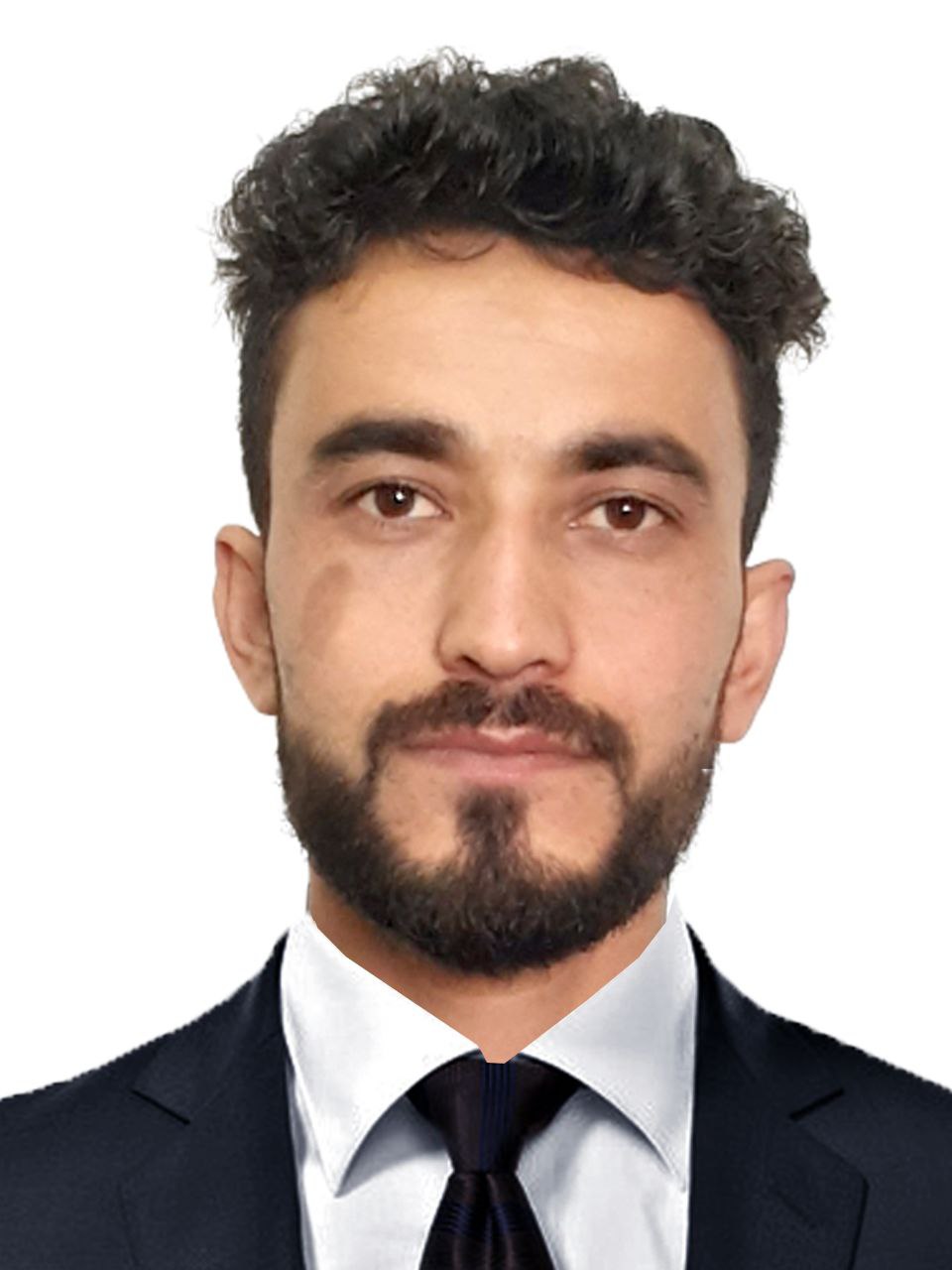
Mr. Syed Rashad Abdali
Educational Background:
- Bachelor’s Degree in Law and Political Science, Kabul University (2013–2016);
- Graduate, National Legal Training Center, Kabul University, Afghanistan (2017–2018).
Work Experience:
- Departmental Associate and Teaching Director, Department of Political Science and International Relations, Faculty of Law and Political Science, Khatam al-Nabieen University (2023–Present);
- Associate, Master’s Programs, Khatam al-Nabieen University (2024–Present);
- Associate, Master’s Programs, Khatam al-Nabieen University (2019–2022);
- Site Manager, Gul Dara District, Election Commission (2018–2019).
Roles and Responsibilities – Departmental Associate
- Collect and submit monthly faculty reports to the Office of Faculty Affairs;
- Prepare and circulate the Scientific Council meeting calendar
- Serve as a member and secretary of the Subcommittee on Order and Discipline;
- Communicate and follow up on decisions of the Scientific Council and subcommittees;
- Sort, distribute, and track correspondence, reports, and communications across faculty units;
- Maintain and archive documents, letters, and reports in designated locations;
- Schedule appointments with the Dean;
- Record and archive all incoming and outgoing correspondence;
- Monitor the faculty email account and report to the Dean;
- Provide assistance to visitors and faculty contact points;
- Actively participate in all quality assurance activities;
- Distribute official communications to higher-level offices and external stakeholders;
- Collect and review faculty dossiers and submit to the Office of Faculty Affairs;
- Develop and maintain a faculty database
- Perform other tasks assigned by the Dean.
Roles and Responsibilities – Teaching Director
- Oversee student academic affairs, including semester registration, file creation, course selection, course add/drop, instructor assignment, deferment, course transfer, probation, graduation reporting, and academic performance monitoring;
- Schedule semester timelines, final exams, and exam cards;
- Track and report on student suspensions and probation per Article 34 of the Academic Regulations;
- Manage all matters related to Master’s theses and undergraduate final research projects;
- Recommend eligible students for internships in hospitals (for medical programs);
- Archiving all documents related to the student’s academic process in the student academic file;
- Archiving grade sheets, result tables, graduation records, and foundational academic documents;
- Maintain records of grades, results tables, and graduation documentation;
- Enter student information into the university system in coordination with the Office of Student Affairs;
- Assist in midterm and final examinations;
- Compile statistical reports on admissions, probation, expulsions, graduation, and suspensions;
- Inform students of faculty objectives, programs, regulations, and policies;
- Coordinate with visiting faculty regarding course policies and syllabus planning;
- Receive and submit academic documents of faculty members to the faculty;
- Prepare weekly schedules and class arrangements in coordination with the department chair;
- Adjust class schedules in case of faculty absence;
- Perform additional duties assigned by the Department Chair in accordance with university regulations.
Departmental Associate – Department of Law
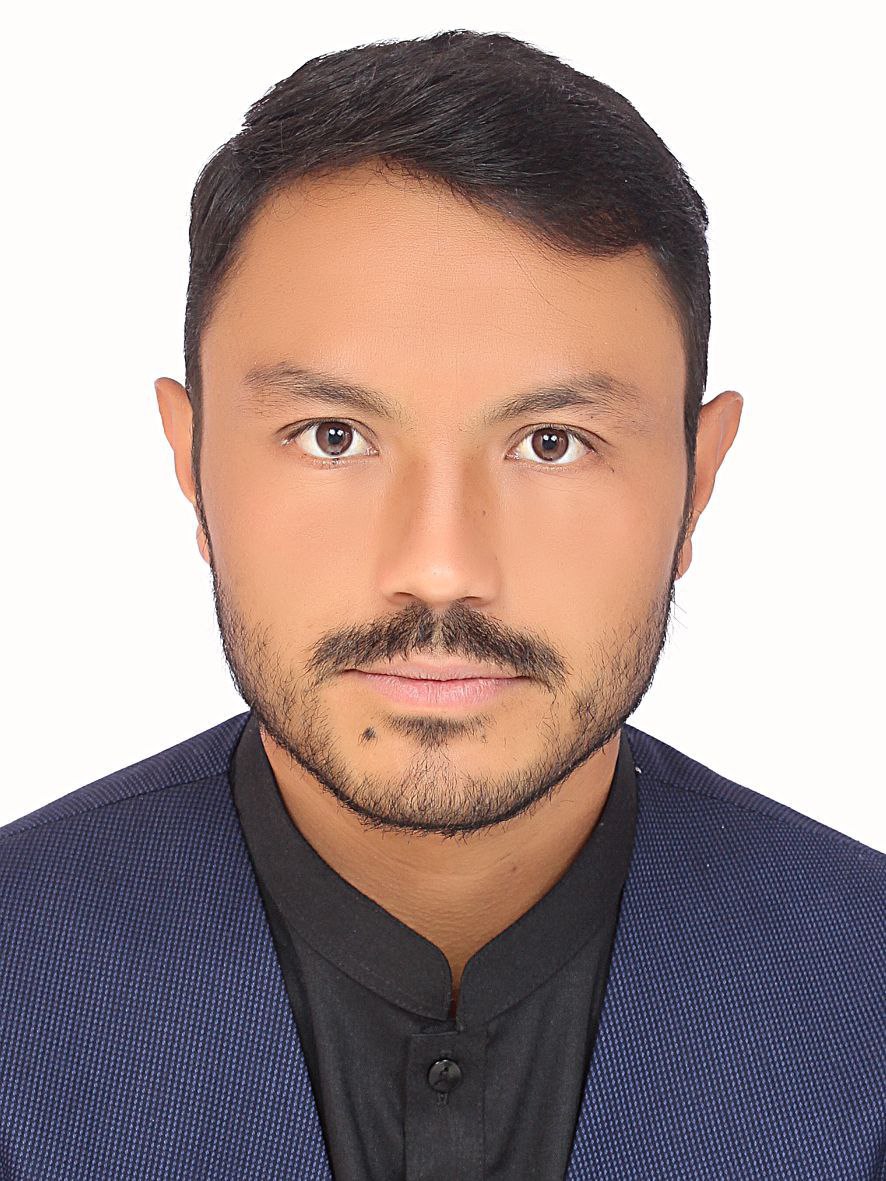
Mr. Mohammad Mahdi Barati
Educational Background:
- Master’s Degree in Private Law, Faculty of Law and Political Science, Ahlulbayt International University, Tehran, Iran, 2023 (1402 AH).
Academic and Executive Activities:
- Practical Internship, Ministry of Justice and Attorney General’s Office
Scientific Works:
- Scholarly article titled A Study on the Conditions for the Enforcement of Specific Performance of Contractual Obligations in Afghan Law.
Roles and Responsibilities – Departmental Associate, Department of Law
- Collect and submit monthly faculty reports to the Office of Faculty Affairs;
- Prepare and circulate the Scientific Council meeting calendar
- Serve as a member and secretary of the Subcommittee on Order and Discipline;
- Communicate and follow up on decisions of the Scientific Council and subcommittees;
- Sort, distribute, and track correspondence, reports, and communications across faculty units;
- Maintain and archive documents, letters, and reports in designated locations;
- Schedule appointments with the Dean;
- Record and archive all incoming and outgoing correspondence;
- Monitor the faculty email account and report to the Dean;
- Provide assistance to visitors and faculty contact points;
- Actively participate in all quality assurance activities;
- Distribute official communications to higher-level offices and external stakeholders;
- Collect and review faculty dossiers and submit to the Office of Faculty Affairs;
- Develop and maintain a faculty database
- Perform other tasks assigned by the Dean.
Curriculum of the Faculty of Law and Political Science
The total number of credits for the bachelor’s degree programs of the Departments of Law and Political Science, in four categories—core, specialized, elective, and university-required courses—according to the National Credit Framework, is a maximum of 158 credits. Students complete their academic credits over eight semesters and graduate in the eighth semester by writing and defending a monograph.
An academic credit is an instructional unit forming part of the curriculum of a graduate/master’s program, determined according to semesters and instructional hours for each course. The curriculum consists of forty to forty-eight units, including core, specialized, practical, and elective subjects, at the master’s level. In the postgraduate program of Khatam Al-Nabieen University, forty credits are allocated for one academic program, and every two credits are taught over 32 hours (16 class sessions).
Dean of the Faculty
Phone: +93 799 522 600
E-mail Address: nabizadabasir@gmail.com
Department of Law Administration
Phone: +93 794 911 004
E-mail Address: Rahimasghari328@gmai.com
Department of Political Science and International Relations Administration
Phone: +93 781 800 010
E-mail Address:
No | Level | Field | Base Fee | Discount | New Fee |
1 | Bachelor’s | Law | 20000 | 50% | 10000 |
2 | Bachelor’s | Political Science | 20000 | 50% | 10000 |
3 | Master’s | International Law | 50000 | 40% | 30000 |
5 | Master’s | Criminal Law and Criminology | 50000 | 40% | 30000 |
5 | Master’s | International Relations | 50000 | 40% | 30000 |